


History Of Ntolmadakia: From Ancient Vineyards to the Aegean Table
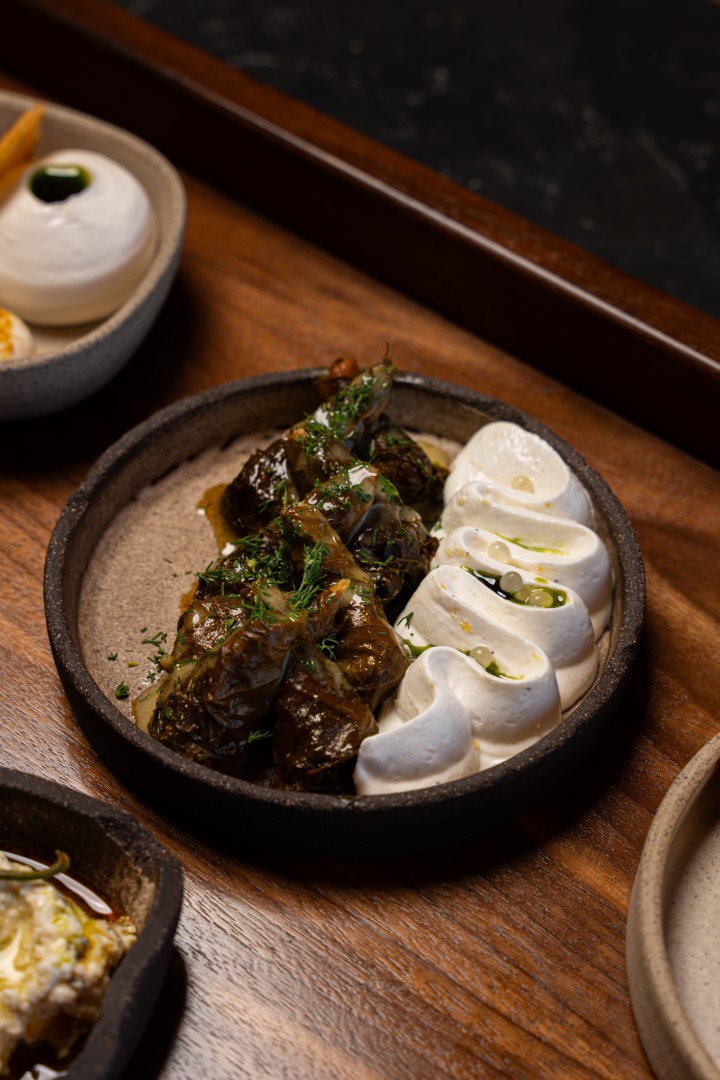
When you bite into one of the tender ntolmadakia at our Rizes Gastro Taverna in Santorini, you are not just indulging in a traditional Greek meze but taking part in a tradition which has been enjoyed for over 2000 years. These delicious little parcels are made by wrapping a mixture of fresh herbs, olive oil, rice and vine leaves around a parcel of tender vine leaves.
Origins
Whilst it may be associated with Ottoman times due to the popularisation of the word ‘dolma’ (to stuff), the act of stuffing food in leaves actually dates back to ancient Greek times.
Ancient Greeks used a variety of food inside their leaves, a precursor to ntolmadakia called thrion. They would wrap together sweet lard, creamy soft cheeses and delicate flour and steam them in fresh fig leaves. Soon grape leaves became popular across the Aegean Islands. In fact, during the siege of Thebes, Alexander the Great used these parcels to feed his army due to the lack of food. He used the leaves from the abundance of wild grapevines!
Development Through Different Empires
During the Byzantine period and Ottoman rule, the stuffed leaf tradition developed. There are two varieties of dolmadakia in Greek homes:
Ntolmadakia Gialantzi: These are the vegetarian version, meaning ‘liar’/‘impostor’ in Turkish. There is no minced meat, they are made up from a combination of aromatic basmati rice, fresh dill, mint, spring onions, pine nuts and liberal amounts of extra virgin olive oil. They are best served cold or at room temperature with a squeeze of fresh lemon.
Meat Stuffed Dolmades: These are cooked with a mixture of minced beef/lamb, rice and herbs. Usually they will have a creamy tangy avgolemono (egg & lemon) sauce.
Cycladic Variations
The Cyclades have their own variation of ntolmadakia. The volcanic soil in Santorini means there are some of the most unique grape vines growing here. The Assyrtiko grapevine is particularly famous.
Traditionally locals would use the youngest leaves from the kouloures. These are basket like vines which grow low to the ground to protect the grapes from the harsh Aegean winds. The leaves have absorbed the minerals from the volcanic soil and sea air giving them a slightly acidic and rich flavour.
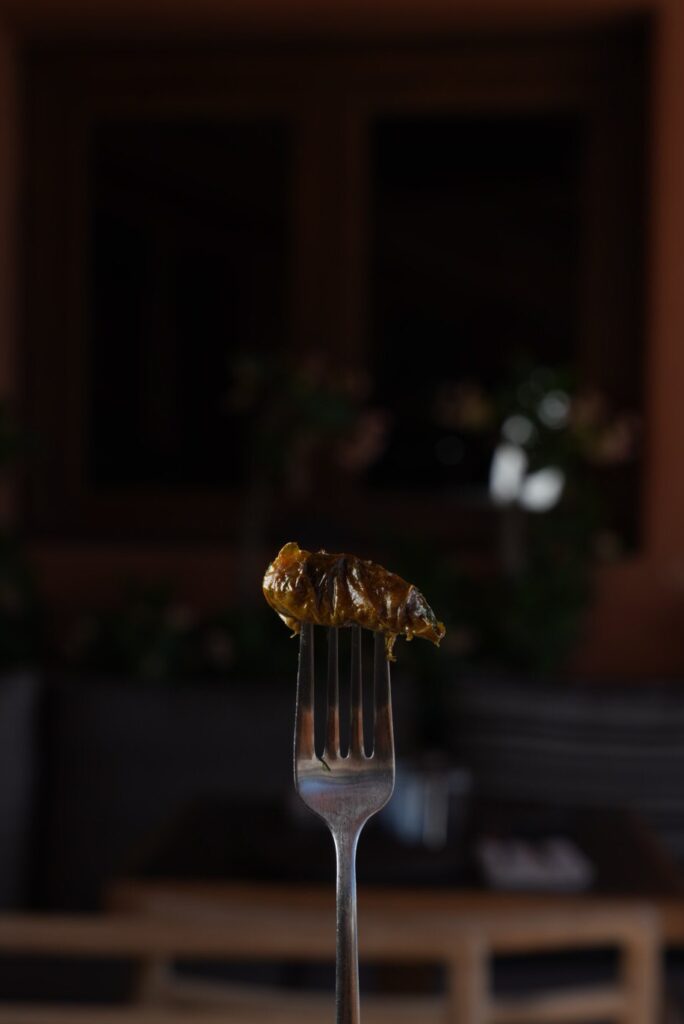
We love to stick to the traditional Greek roots of our cooking and we use fresh locally sourced ingredients. We make our dolmadakia daily. They are hand rolled using tender grape leaves and bursting with fresh island herbs. They are served with hand made Greek yoghurt and extra virgin olive oil.
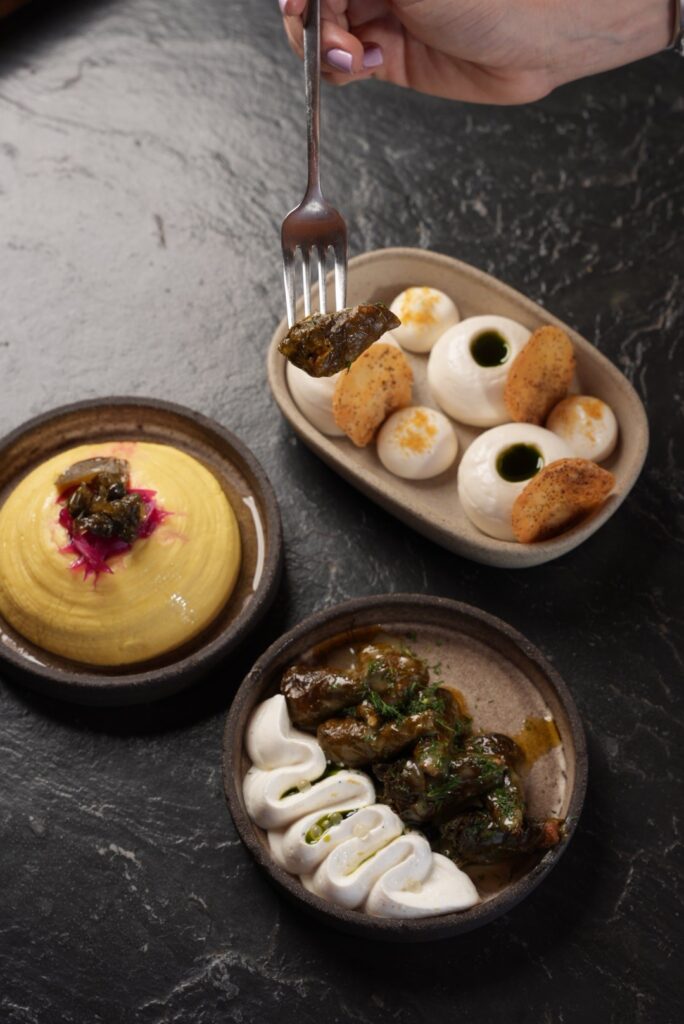
Enjoy our ntolmadakia as a meze during the afternoon with a glass of chilled Santorini wine or as a starter to our range of authentic island dishes. They really do give you a taste of history!
Come and taste the real Santorini flavours at Rizes Gastro Taverna! Book your table now to experience the Greek art of hospitality: https://rizessantorini.com