


A Taste of History: The Evolution of Pastitsio at Rizes Santorini
The Magic of Cycladic Gastronomy in Fira
There is something magical in the air as the sun begins its slow descent over the Aegean Sea, casting golden rays across the white-washed alleys of Fira. This magical hour entices food lovers to the doors of Rizes Gastro Taverna, located in the heart of Santorini serving not only the most beautiful views over the Caldera, but also hosts an array of historical Greek recipes that are reinvented in the modern interpretation of its executive chef Alexandros Makropoulos.
One of the specialty dishes of the place that warms your heart and soul is called pastitsio. To discover what makes this dish prepared in Rizes so special, it might be worth diving into history and learning about the fascinating origins of pastitsio.
From Renaissance Venetian Pasticcio to Greek Comfort Food
It is a common misconception about Greek cuisine that it has always been as we know it today. Some of the most popular dishes were actually transformed from their original versions by foreign rulers that occupied Greek lands. Take pastitsio for example, the name of which is familiar to many Greek restaurants around the world. According to culinary historians, the dish used to be called simply pasticcio, a catch-all name for a mixture of meat, game, and cheeses, covered in pastry dough. As the Venetians occupied many Greek islets, they introduced their baked pasta pies with a mixture of meat and cheese. These were the early versions of the pastitsio, popular among the locals in the times of the Venetian rule. Eventually, people began preparing the dish in their homes using a rustic pie dough and ground macaroni. However, there was no creamy cheese sauce that nowadays we have come to associate with pastitsio.
The Tselementes Culinary Revolution
The next step in the evolution of this beloved Greek dish belongs to a great Greek chef by the name of Nikolaos Tselementes. Coming from a family of respected cooks, Tselementes studied culinary arts in Vienna and Paris, mastering the fundamentals of classical French cuisine. Upon his return to Greece, Nikolaos took it upon himself to elevate the Greek cooking of humble households to greater artistic and culinary standards. He was the one that first introduced the al fresco dining concept to Greek tourists. More importantly, perhaps, he revolutionized the popular pastitsio by replacing the hearty pie dough with a delicate French one and introduced a creamy bechamel sauce to the mixture of ground beef and macaroni. Thus, he managed to transform this peasant dish into a real architectural masterpiece of Greek culinary art.
Chef Alexandros Makropoulos Reimagines a Classic at Rizes
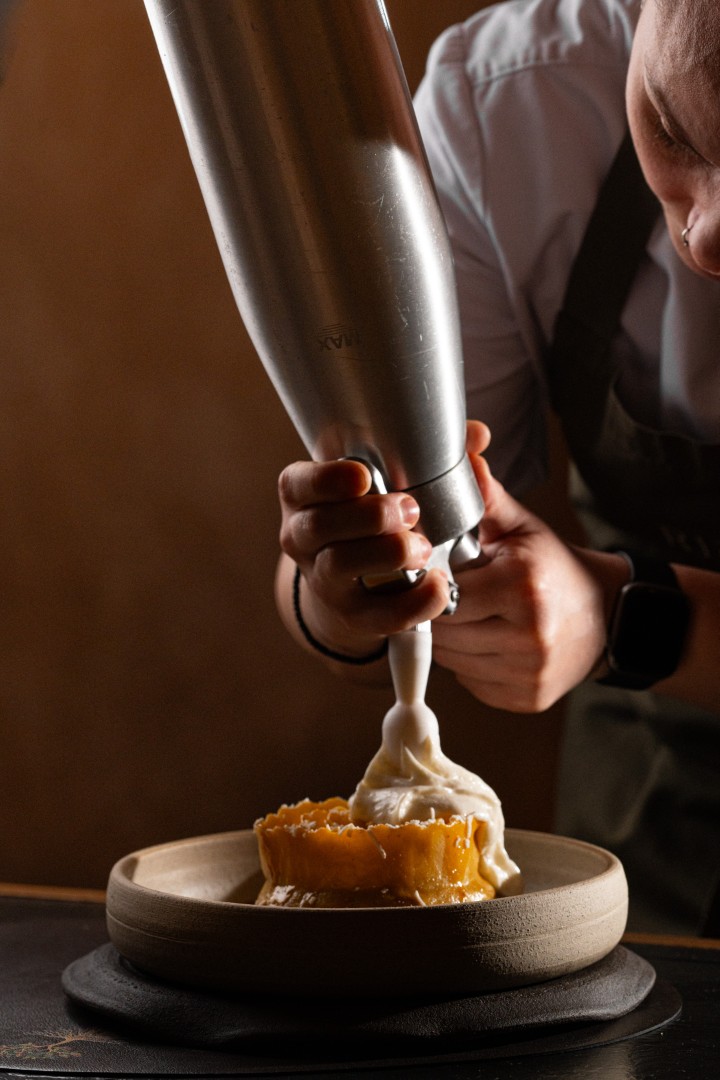
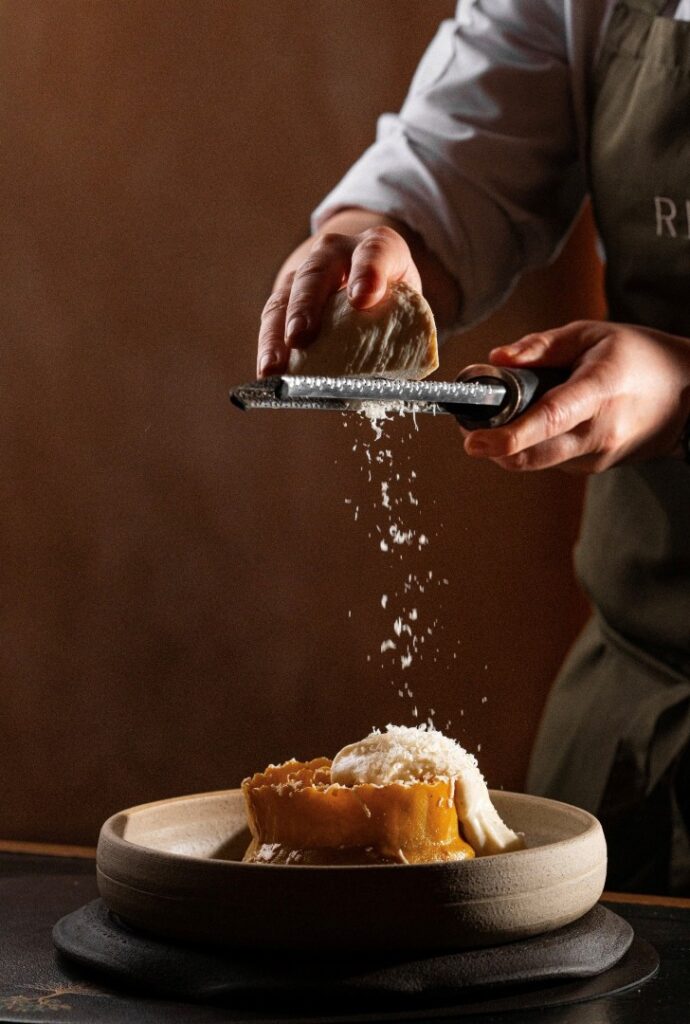
The culinary legacy of Master Tselementes was continued and further developed by the head chef Alexandros Makropoulos. His modern take on the traditional Greek pastitsio is now being enjoyed in the heart of Santorini at the cozy Rizes Gastro Taverna . As expected, this regional specialty is being reinterpreted by executive chef Alexandros Makropoulos in true modern Greek style. He manages to avoid the over-salted, heavy, and greasy taste that many Greek dishes have when prepared in the traditional way. Instead, you can taste a number of exciting flavors that make this iconic dish both memorable and unique. For starters, the slow-cooked beef ragout with a long cooking time is perfectly balanced with a fresh pasta mixture, cut with a spicy tomato sauce. Meanwhile, the classic bechamel sauce is given a new lease of life and presented in a form of a creamy, golden, and almost caramel-like consistency that binds all the flavors of the dish together. The addition of the tangy myzithra cheese takes the final taste of this delightful creation to new, exciting levels.